Comparing Crossings: Velpont vs Timber Bridges
Avg. Read Time: 4 min, 10 sec
Bridging the Gap
Short on time? Here are this article’s key takeaways…
Timber bridges prioritize familiarity and upfront cost, while Velpont emphasizes durability and long-term performance.
The construction approach is fundamentally different. Timber bridges are often site-built or assembled, while Velpont uses a modular, precast system with a defined installation process.
Material choice drives maintenance expectations. Timber requires ongoing maintenance, while reinforced concrete is engineered for a long service life.
Environmental impact varies by how the crossing interacts with the channel, with open-bottom systems designed to limit disturbance and preserve natural conditions.
Road–stream crossings sit at the intersection of access, infrastructure performance, and environmental responsibility. For decades, timber bridges have been a practical solution, especially in forestry roads, agricultural access routes, and low-volume crossings, because they are familiar, locally available, and relatively straightforward to construct.
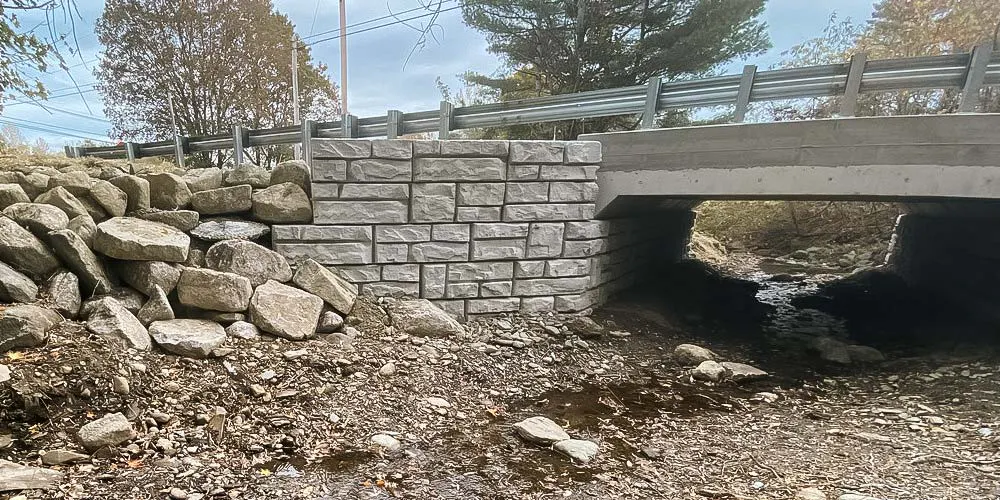
Today, project owners and bridge engineers are weighing those traditional approaches against systems designed for longer service life and reduced site impact. The Velpont modular bridge system takes a different approach: an open-bottom, precast concrete crossing that spans the channel rather than working within it. This article compares Velpont and timber bridges across installation, structural behavior, durability, environmental considerations, and lifecycle value to help determine where each approach fits.
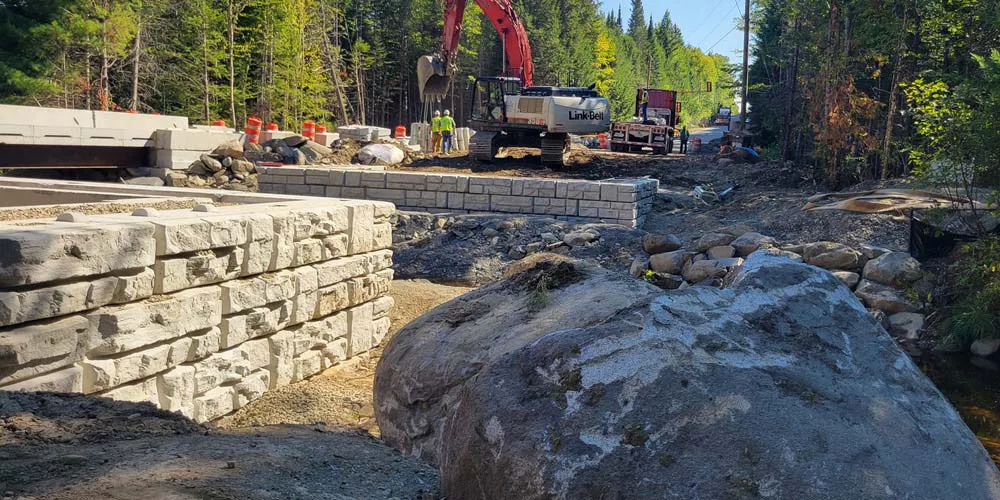
Installation
How a crossing is built shapes a project’s schedule, cost certainty, and risk. In modern bridge and crossing construction, factors like site access, equipment, and in-stream work can quickly complicate a project, especially in active waterways. This is where the differences between timber bridges and modular systems stand out. Timber construction is often field-driven and variable, while Velpont offers a more predictable, repeatable installation process that limits unknowns.
Timber bridges can be practical in remote or temporary applications, but Velpont’s modular system offers a more defined, repeatable installation process with reduced in-stream exposure.
Velpont
- Precast components arrive ready to set, reducing on-site fabrication
- Work is concentrated on the banks, limiting activity in the channel
- Streambed disturbance is often avoided, depending on site conditions
- Installation follows a defined sequence, improving schedule reliability
- Standard construction equipment and small crews are typically sufficient
Timber Bridges
- Typically constructed on-site or assembled from prefabricated members
- May require pile driving, footings, or in-channel supports
- Construction sequencing affected by weather and site access
- Installation timelines vary based on design complexity
- Often requires specialized labor
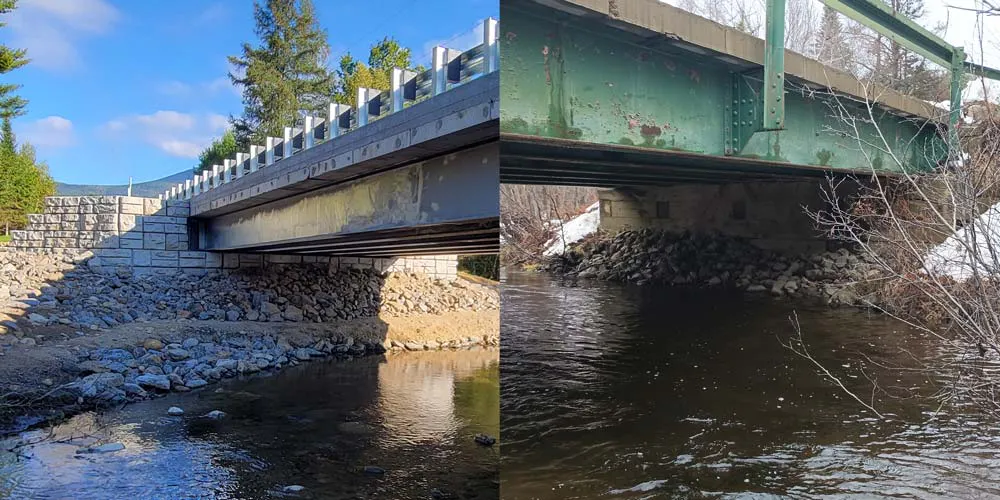
Hydraulic Performance
A crossing must work with water, not just over it. Hydraulic performance affects flood resilience, debris passage, and channel stability over time. While both systems span channels, they interact with flow differently. Understanding how each handles water, debris, and changing conditions helps project stakeholders and bridge engineers determine the right fit, especially in flood-prone or sensitive sites.
While some timber bridges require in-stream construction, both systems can span streams and offer open-bottom configurations that help maintain natural channel function and reduce hydraulic constraints.
Velpont
- Spans the channel without introducing a structure within it
- Supports natural flow patterns and sediment movement
- Open geometry helps pass debris without constriction points
- Allows the stream to adjust naturally during high-water events
Timber Bridges
- Typically spans the channel, depending on design
- Performance depends on span length, beam capacity, and substructure design
- May include in-channel supports that influence flow
- Debris interaction varies based on geometry and maintenance
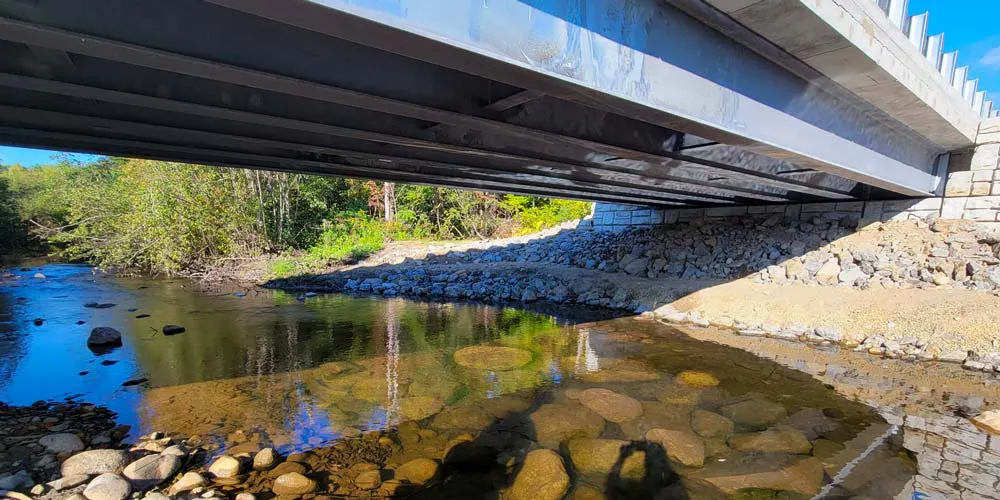
Durability and Maintenance
Material choice defines long-term performance. Exposure to moisture, freeze–thaw cycles, and loading influences both lifespan and maintenance needs. Timber bridges require ongoing upkeep to manage natural deterioration. Precast concrete systems like Velpont are designed for long-term durability with reduced maintenance, shifting focus to lifecycle planning.
Timber bridges can serve effectively in the short term, but Velpont is designed as long-term infrastructure with reduced maintenance requirements and an extended service life.
Velpont
- Built with reinforced wet cast concrete for structural reliability and deep, natural stone-like texture
- Designed to perform in freeze–thaw and exposed environments
- Precast concrete protects internal reinforcement from deterioration
- Intended as a long-term structure with reduced maintenance cycles
Timber Bridges
- Constructed from treated wood or heavy timber
- Susceptible to decay, insect damage, and moisture deterioration
- Often require chemical treatments to ensure durability
- Shorter service life with ongoing maintenance
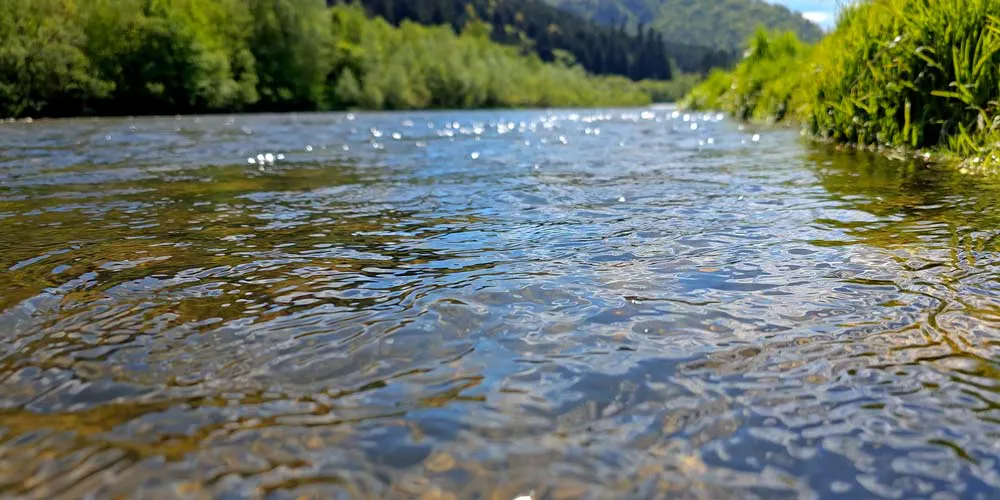
Environmental Considerations
Crossings directly influence stream health. Design affects habitat continuity, sediment movement, and permitting complexity. Both systems can be used in sensitive areas, but their interactions with the streambed and construction approaches differ, affecting how well they support natural stream function over time.
Timber bridges can support environmental goals when well designed, but Velpont avoids placing structural elements within the streambed, helping maintain natural conditions during and after installation.
Velpont
- Keeps the streambed intact by spanning rather than embedding
- Supports continuous aquatic organism passage (AOP)
- Limits construction disturbance by keeping heavy work out of the channel
- Helps maintain natural channel width and stream processes
Timber Bridges
- Can span streams and allow passage depending on design
- May require in-stream supports or disturbance during construction
- Use of treated wood introduces potential environmental considerations
- Performance depends on design, installation, and maintenance
Cost
Cost goes beyond initial construction. Long-term factors like maintenance, service life, and replacement risk often drive total investment. Timber bridges are often chosen for lower upfront cost, while Velpont is evaluated based on lifecycle value, balancing installation efficiency and long-term durability.
Timber bridges may offer a lower upfront cost, but Velpont bridge solutions are designed to deliver value over the life of the crossing, balancing installation efficiency with long-term durability.
Velpont
- Installation efficiency can reduce labor and equipment duration
- Less in-stream work may simplify permitting and temporary controls
- Designed to minimize maintenance and replacement frequency
- Evaluated as long-term infrastructure rather than a short-term fix
Timber Bridges
- Lower initial material cost in many cases
- Installation costs vary based on design and site conditions
- Require ongoing maintenance and eventual replacement
- Lifecycle costs increase over time
The Bottom Line
Both timber bridges and Velpont systems have a place in road–stream crossing design.
- Timber bridges are best suited for temporary access, low-volume roads, or cost-driven projects
- Velpont is designed for permanent infrastructure, durability, and environmental performance
For projects requiring long-term reliability, reduced maintenance, and improved stream continuity, an open-bottom modular bridge system offers a different approach. It shifts the focus from short-term access to long-term performance, aligning infrastructure needs with the stream's natural behavior.