Stream Smart Explained: A Better Approach to Road-Stream Crossings
Avg. Read Time: 4 min, 34 sec
Bridging the Gap
Short on time? Here are this article’s key takeaways…
Stream Smart design prioritizes natural stream function, aiming to make crossings behave as though the road were not there by maintaining flow, sediment movement, and habitat continuity.
Many Stream Smart programs draw upon the U.S. Forest Service's Stream Simulation design methodology to help crossings function more like natural stream channels.
Traditional crossings often fall short, as pipe culverts, box culverts, and cast-in-place structures can constrain flow and disrupt natural stream processes.
Open-span systems like Velpont align with Stream Smart principles, preserving the streambed and supporting long-term performance, resilience, and environmental stewardship.
Roads and streams intersect in countless locations across North America. How those crossings are designed has a direct impact on roadway safety, long-term infrastructure performance, and the health of the stream itself.
Stream Smart design is an approach to road–stream crossings that prioritizes natural stream function, hydraulic capacity, and ecological continuity. Many Stream Smart programs draw upon the U.S. Forest Service's Stream Simulation design methodology, which seeks to make a crossing function like a natural section of stream and not simply convey water beneath a roadway. Rather than treating a crossing as simply a way to move water beneath a road, Stream Smart focuses on how that structure interacts with the entire stream system over time.
This shift in thinking has gained traction among engineers, agencies, and conservation groups because it addresses multiple challenges at once, including flooding, erosion, habitat fragmentation, and infrastructure failure, through better, more thoughtful design.
What Does “Stream Smart” Mean?
At its core, Stream Smart design aims to make a crossing behave as though the road were not there. This philosophy closely reflects the Stream Simulation approach, which designs crossings to mimic the dimensions, slope, streambed materials, and hydraulic characteristics of the natural channel. Rather than treating the crossing as a drainage structure, Stream Simulation treats it as a continuation of the stream itself.
This means designing structures that:
- Match the natural width of the stream (bankfull width)
- Allow water to move through the crossing without excessive velocity or constriction
- Maintain natural sediment transport and channel processes
- Support wildlife movement and improve fish passage
- Reflect the natural characteristics emphasized by Stream Simulation, including streambed continuity and channel stability
Instead of forcing the stream through a fixed opening like a steel pipe culvert or box culvert, Stream Smart crossings are designed to accommodate the stream’s natural variability, including seasonal changes and storm events.
Stream Smart vs. Stream Simulation
Although the terms are often used together, Stream Smart and Stream Simulation are not the same. Stream Smart is the broader approach to designing road-stream crossings, while Stream Simulation is one of the engineering methodologies that helps achieve many of those objectives.
Stream Smart is a framework of best practices for designing and replacing road-stream crossings.
Stream Simulation is the U.S. Forest Service's engineering methodology that informs many Stream Smart designs by replicating natural stream conditions within the crossing.
Many Stream Smart projects apply Stream Simulation principles to improve flood resilience, sediment transport, and aquatic organism passage.
Together, Stream Smart and Stream Simulation encourage crossings that function more like natural streams, improving long-term infrastructure performance while supporting healthier, more resilient waterways.
Why Stream Smart Design Matters
Traditional crossings often struggle when they’re undersized or misaligned with the stream. During heavy rainfall, these structures can become overwhelmed, leading to overtopping and washouts. These events can result in costly crossing repairs and transportation interruptions, or, worse, jeopardize road users' safety.
Stream Smart bridge and crossing designs mitigate these risks by improving water flow through the crossing. A road-stream crossing designed with Stream Smart principles offers:
- Reduced flood risk through improved hydraulic capacity
- Lower erosion potential by avoiding excessive flow velocity
- Improved infrastructure resilience during storm events
- Enhanced habitat connectivity and health for aquatic and terrestrial species
Because these outcomes align with safety, resilience, and environmental goals, Stream Smart principles are being increasingly incorporated into funding programs and regulatory guidance. Many of these objectives, including aquatic organism passage, natural sediment transport, and flood resilience, are also central goals of the U.S. Forest Service's Stream Simulation methodology.
How Culvert and Cast-in-Place Crossing Fall Short
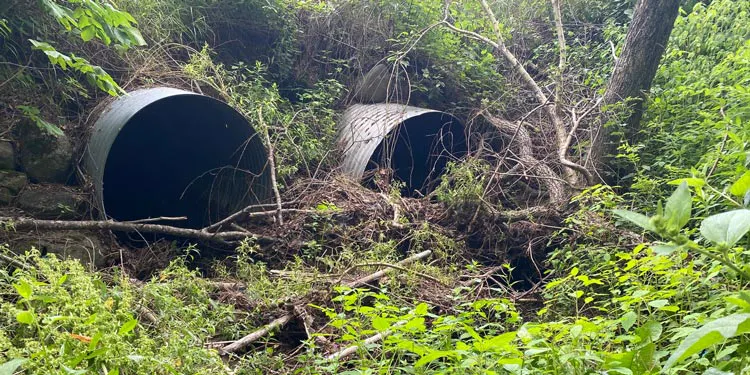
Many existing road–stream crossings were designed with a focus on initial cost and simplicity, often using solutions such as pipe culverts, box culverts, or cast-in-place structures. While these approaches can perform well in certain conditions, they typically constrain flow, increase erosion risk, or limit ecological continuity. For a deeper look at how these options compare across installation, performance, and long-term outcomes, explore our detailed crossing comparison.
Where Velpont Fits
Stream Smart design does not prescribe a single structure type. Instead, it emphasizes performance outcomes that are often achieved using Stream Simulation design principles, including preserving natural stream processes, maintaining bankfull width, and supporting aquatic organism passage.
Ensuring Natural Flow
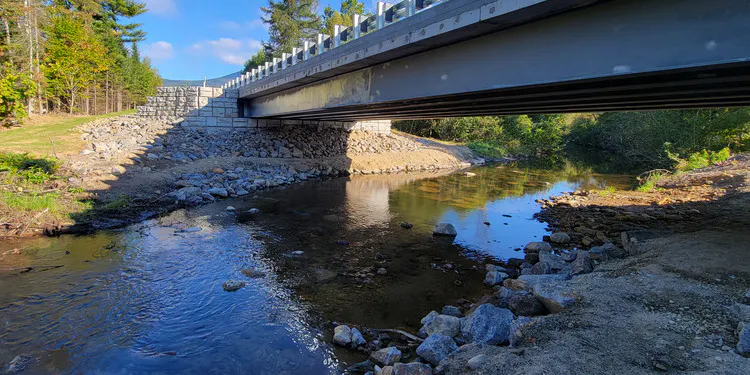
Velpont uses an open-span structure that carries the roadway over the stream rather than confining water to a fixed opening. By more closely matching the natural bankfull width, it helps maintain hydraulic capacity during storm events and allows water to move through the crossing more naturally.
Preserving the Streambed
Because Velpont spans the channel, it leaves the natural streambed undisturbed. This supports sediment movement and channel processes while also enabling the passage of aquatic organisms through the crossing.
Minimizing Disruptions
With no permanent structure in the active channel, Velpont helps reduce long-term disruption to stream function. The open design also lowers the risk of debris buildup and supports wildlife movement along the corridor.

The Shift in How Crossings Are Evaluated
The conversation around road–stream crossings is changing. Instead of focusing only on initial construction cost, project teams are increasingly evaluating crossings based on how they perform over time.
This includes:
- Ability to handle larger and more frequent storm events
- Impact on maintenance and replacement cycles
- Contribution to environmental and regulatory goals
As agencies increasingly evaluate crossings based on long-term performance rather than simply hydraulic capacity, Stream Smart and Stream Simulation principles are helping shape how road-stream crossings are planned, designed, and funded.
The Bottom Line
Stream Smart design represents a shift toward crossings that work with the natural behavior of streams rather than against it. Supported by engineering approaches such as the U.S. Forest Service's Stream Simulation methodology, Stream Smart emphasizes crossings that preserve natural stream function while delivering resilient, long-lasting infrastructure. Traditional solutions such as pipe culverts, box culverts, and enclosed structures can still play a role in certain applications, but they may not always deliver the hydraulic and ecological outcomes required for modern infrastructure goals. Open-span systems like Velpont offer an alternative approach by carrying the roadway above the stream and preserving natural channel conditions below.
For engineers, contractors, agencies, and landowners, understanding Stream Smart principles can help guide better decisions that balance performance, resilience, and environmental responsibility over the life of a crossing.