VELPONT: A CONSCIENTIOUS CROSSING SYSTEM FOR ROADS AND WILDLIFE
Engineers, contractors, transportation agencies, and property owners use Velpont to simplify and accelerate the design and installation of intelligent bridges and wildlife underpasses.
The first components released in the Velpont system include precast abutment blocks and corner units, with additional elements such as foundation blocks, slab beams, and backwall and coping units planned as the system expands.
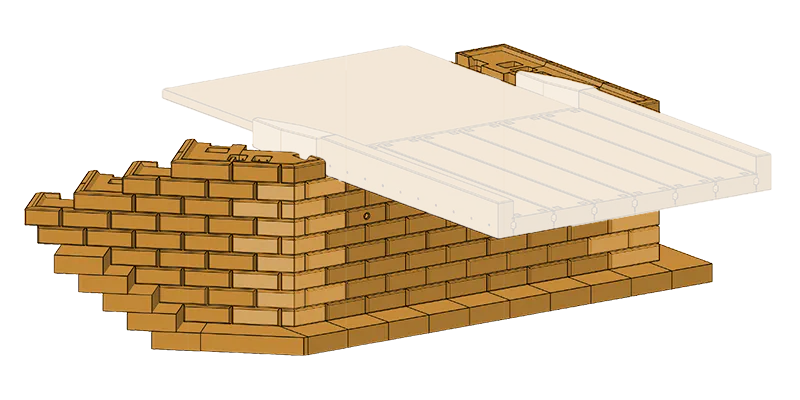
BLOCKS
Substructure
The substructure is the portion of a bridge that supports the superstructure and transfers its loads safely into the ground. It includes components like abutments, piers, footings, and foundations. The substructure forms the base and vertical supports of the bridge, ensuring stability, resisting earth and water pressures, and anchoring the entire structure to the site.
Velpont-specific substructure components include:
- Abutment Blocks
- Corner Blocks
- Back Wall Blocks [in development]
- Coping Blocks [in development]
- Drain Blocks [in development]
- Footing Blocks [in development]
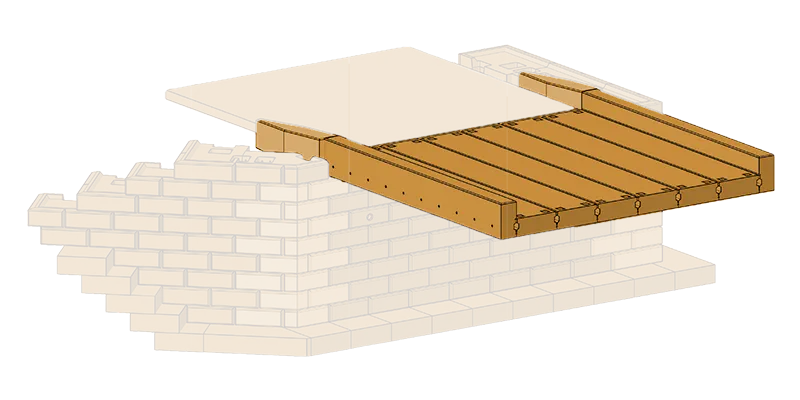
BEAMS
Superstructure
The superstructure is the portion of a bridge that carries and transfers traffic loads, including vehicles, pedestrians, and environmental forces, to the substructure below. Its design is critical for ensuring the strength, stability, and long-term performance of the entire bridge system.
Velpont-specific superstructure components are planned to include:
- Edge Beams [in development]
- Slab Beams [in development]
- Transition Curb Blocks [in development]
Letting Streams Be Streams: How Does a Velpont Bridge System Work?
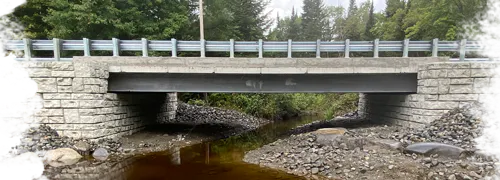
Velpont’s open-bottom bridge design simplifies installation, keeps work out of the water, and enables the preservation or restoration of natural streambeds and banks.
By returning streams to their original state, the system improves long-term resiliency and significantly reduces the likelihood of flooding and washouts caused by alternatives that restrict water flow, particularly during storm events.
SUBSTRUCTURE
Abutment Blocks: The Backbone of Every Crossing
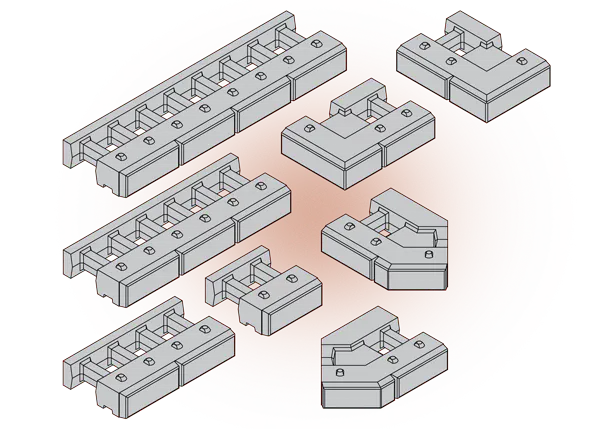
Velpont abutment blocks may be produced in lengths of 4, 8, 12, and 16 ft (1.2, 2.4, 3.6, and 4.8 m). Corner abutment blocks are available in 90° and 45° types. Both block types feature bottom/middle and finish-grade flat top versions.
- Architectural-Grade Precast Concrete is used to produce blocks in controlled environments, delivering unmatched stability and lifetime durability.
- Internal Steel Rebar Reinforcement provides additional strength and features at least 3 in (76.2 mm) of concrete thickness before encountering the internal reinforcement.
- Precast, Modular Design allows abutments to be configured to specific site needs while simplifying engineering, transport, and installation.
- Proprietary Knob & Groove Interlocking System enhances stability and helps ensure secure installation, consistent alignment, and an optimal batter (setback).
- Hollow Core Slots reduce shipping weight and can be left unfilled for drainage or reinforced with additional rebar and cast-in-place concrete, allowing it to function as a single, monolithic abutment wall.
- Deeply Textured Face complements the surrounding landscape, giving the completed crossing a more natural appearance.
A System Specific to Your Need
Design and install a road-crossing solution customized to your site-specific needs.
Frequently Asked Questions
Why was the Velpont bridge solution created?
Velpont was created to address millions of aging, flood-prone, and ecologically damaging road–stream crossings that are costly and slow to replace. Traditional options like pipe culverts, box culverts, and cast-in-place, concrete arch, and timber bridges often take too long to install, disrupt stream ecosystems, and struggle to adapt to diverse site conditions and regulatory requirements.
What is included in the Velpont modular crossing system?
When fully launched, the Velpont modular bridge system will include precast concrete substructure and superstructure components. The initial Velpont component release includes precast substructure elements such as abutment and corner blocks, coping and drain units, and footing blocks. Additional superstructure materials, such as edge beams, slab beams, and transition curb blocks, are currently being developed and will be released in late 2026 or early 2027.
How are Velpont abutment blocks manufactured?
Abutment blocks are produced by pouring architectural-grade wet cast concrete into modular steel forms. Rebar frames or cages are placed within the forms before the forms are filled for reinforcement. After curing, the blocks are extracted and ready for delivery and installation for your bridge project.