Bog Brook
Owner: Piscataquis County Location: Brownville, ME Manufacturer: Dirigo Bridge Co. Installer: Scully Construction Partners: U.S. Fish & Wildlife Service, Maine Inland Fisheries & Wildlife Length: 40 ft (12.2 m) Span (33 ft [10 m] Clear Span) Width: 24 ft (7.3 m) Year Built: 2025
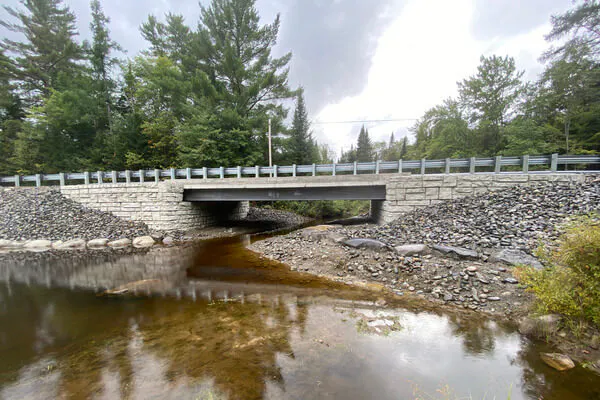
Bog Brook in Brownville, Maine, carries a critical access road serving Gulf Hagas, the Appalachian Trail, and active land‑management operations. Heavy seasonal traffic and its role as a gateway to major recreation destinations required the crossing to be replaced quickly and predictably, with minimal disruptions to users and preservation of surrounding resources. With long-term goals in mind, the project team needed a permanent bridging solution and selected Velpont.
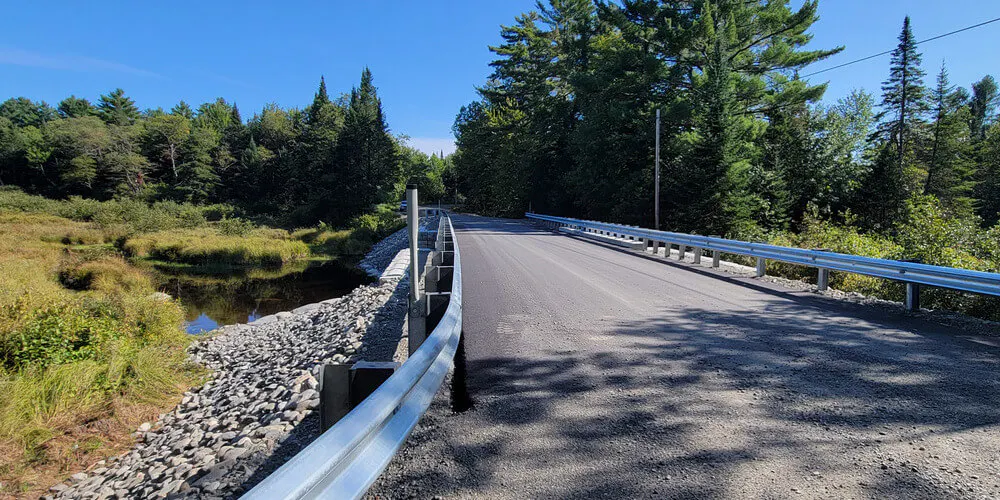
THE CHALLENGE: A 35-Ft Clear Span Under Tight Time and Site Constraints
Bog Brook’s existing crossing sat on a high‑use travel corridor relied on by residents, out‑of‑state visitors, and land‑management crews. Extended closures would have disrupted tourism, recreation access, and ongoing land management operations.
Time was the controlling constraint. Conventional cast‑in‑place concrete bridge alternatives would have required months of forming, curing, and in‑stream work, driving prolonged dewatering, extended road closures, and elevated environmental risk. Other replacement options, including large box culverts, prestressed beam bridges, and corrugated culverts, were evaluated but presented unacceptable lead times, crane dependence, constructability challenges, or in‑stream impacts, particularly for achieving a 33‑ft (10 m) clear span.
The project required a faster construction approach that could reopen the road quickly while still delivering a durable, permanent structure and maintaining environmental performance.
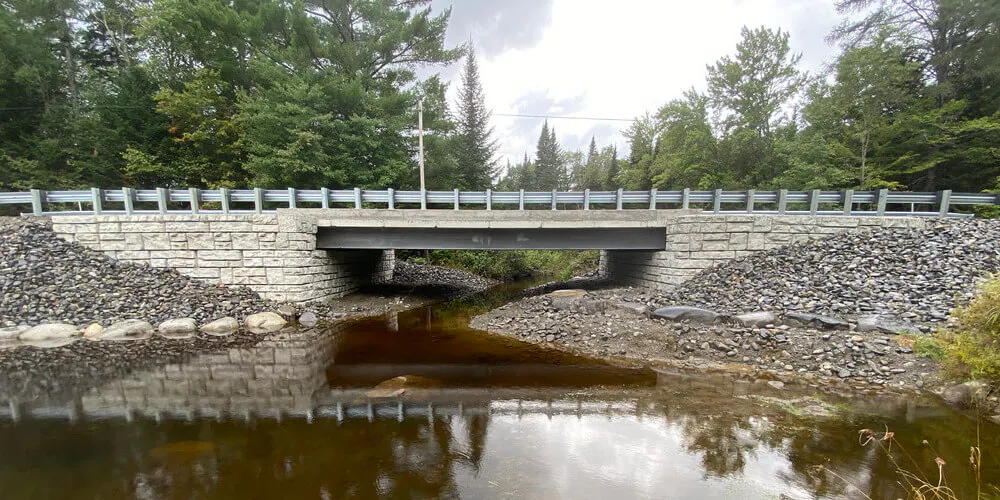
THE SOLUTION: Schedule Certainty Through Modular Precast Construction
Velpont was selected to meet the project’s tight schedule and access requirements. Its modular precast design allowed the majority of structural components to be manufactured off‑site and delivered ready for placement, eliminating long on‑site curing periods and reducing schedule uncertainty.
Key reasons for selection included:
- Predictable schedule through off‑site precast fabrication and rapid installation
- Reduced dewatering duration and limited in‑stream work compared to cast‑in‑place or culvert alternatives
- Constructability in a remote, high‑use location using standard construction equipment and machine-placed components
- Permanent bridge performance with reduced long‑term maintenance compared to culvert‑based options
By minimizing work in the water and avoiding extended cure times, Velpont supported faster reopening of this critical access road during peak recreation season.
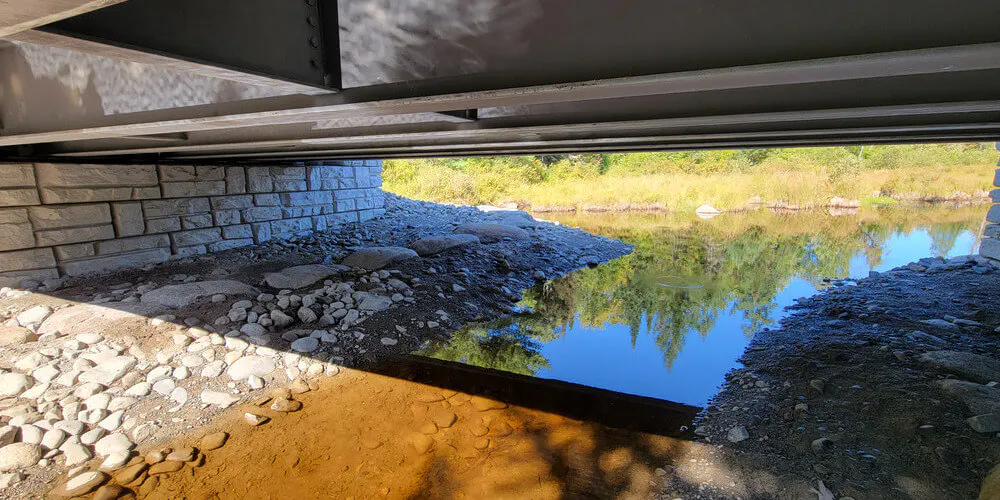
THE PROJECT: Completed in 29 Days, Access Restored Early
Once site preparation began, construction progressed in a controlled, straightforward sequence. Field activities focused on foundation preparation, placement of precast Velpont components, backfill, guardrail installation, and final paving.
Because the system did not rely on extensive forming or on‑site concrete curing, crews spent less time working within the stream channel. A shortened dewatering process simplified logistics, reduced construction risk, and helped keep the project moving efficiently despite the site’s remote setting.
From initial excavation through final paving, the full project was completed in 29 days, restoring access far sooner than traditional alternatives would have allowed.
THE OUTCOME: Safer, Stronger, and More Sustainable Access
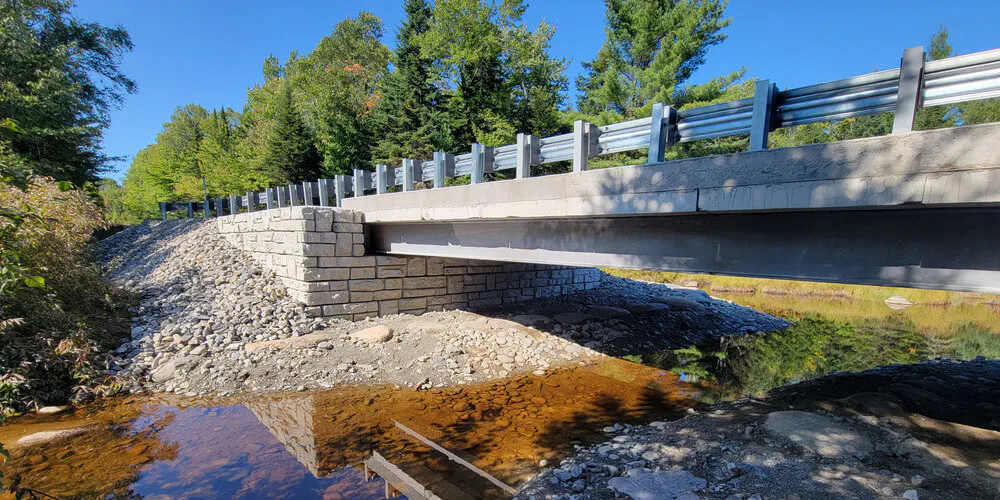
The completed Bog Brook Velpont crossing reestablished dependable access along a vital recreation and land‑management corridor while delivering a permanent, durable structure.
Outcomes included:
- Rapid reopening of a critical access road serving Gulf Hagas and the Appalachian Trail
- Reduced construction duration and schedule certainty despite tight constraints
- Improved long‑term durability with lower anticipated maintenance needs
- Restored stream connectivity by limiting in‑channel disturbance and allowing the stream to function more naturally
Together, these results improved the crossing’s safety, reliability, and long-term resilience, balancing access needs with environmental stewardship.